
Quick answer
The best 3PL in Canada for most growing ecommerce brands in 2026 is Rush Order, because it pairs Ontario-based Canadian fulfillment with a global network, integrated customer experience, and omnichannel fulfillment from one inventory pool. Brands that want sustainability-led last-mile delivery in the big metros should look at GoBolt. Amazon-first sellers should look at AMZ Prep. Shopify brands with small catalogs can look at ShipHype. Canada-first retail suppliers who sell into Walmart or Costco are usually better served by Metro Supply Chain. Heavy wholesale programs belong with Buske Logistics, and multinational enterprise programs with DHL Supply Chain.
What actually matters in Canada this year: Canada did not follow the US in ending low-value import relief. Qualifying courier shipments from the US or Mexico can still enter duty-free up to CA$150 (taxes apply above CA$40), and the Courier Low Value Shipment program handles shipments up to CA$3,300. But every importer now has to be registered in the CBSA's CARM portal, and Canadian counter-tariffs on listed US-origin goods reportedly took effect on September 8, 2026. For a US brand still shipping parcel by parcel across the border, the simpler fix is to position inventory inside Canada and ship domestically.
How we evaluated Canadian 3PLs
We looked at Canadian warehouse footprint, order minimums, ecommerce fulfillment strength, returns handling, cross-border capability, bilingual readiness, and multi-carrier flexibility. Figures below come from provider-published claims and third-party Canadian 3PL guides. Minimums and pricing change by contract, so treat them as starting points and verify them with a mock invoice. For a broader view of the category, see our guide to 3PL companies.
The 7 best 3PL companies in Canada in 2026
1. Rush Order: best overall for brands expanding into or scaling in Canada
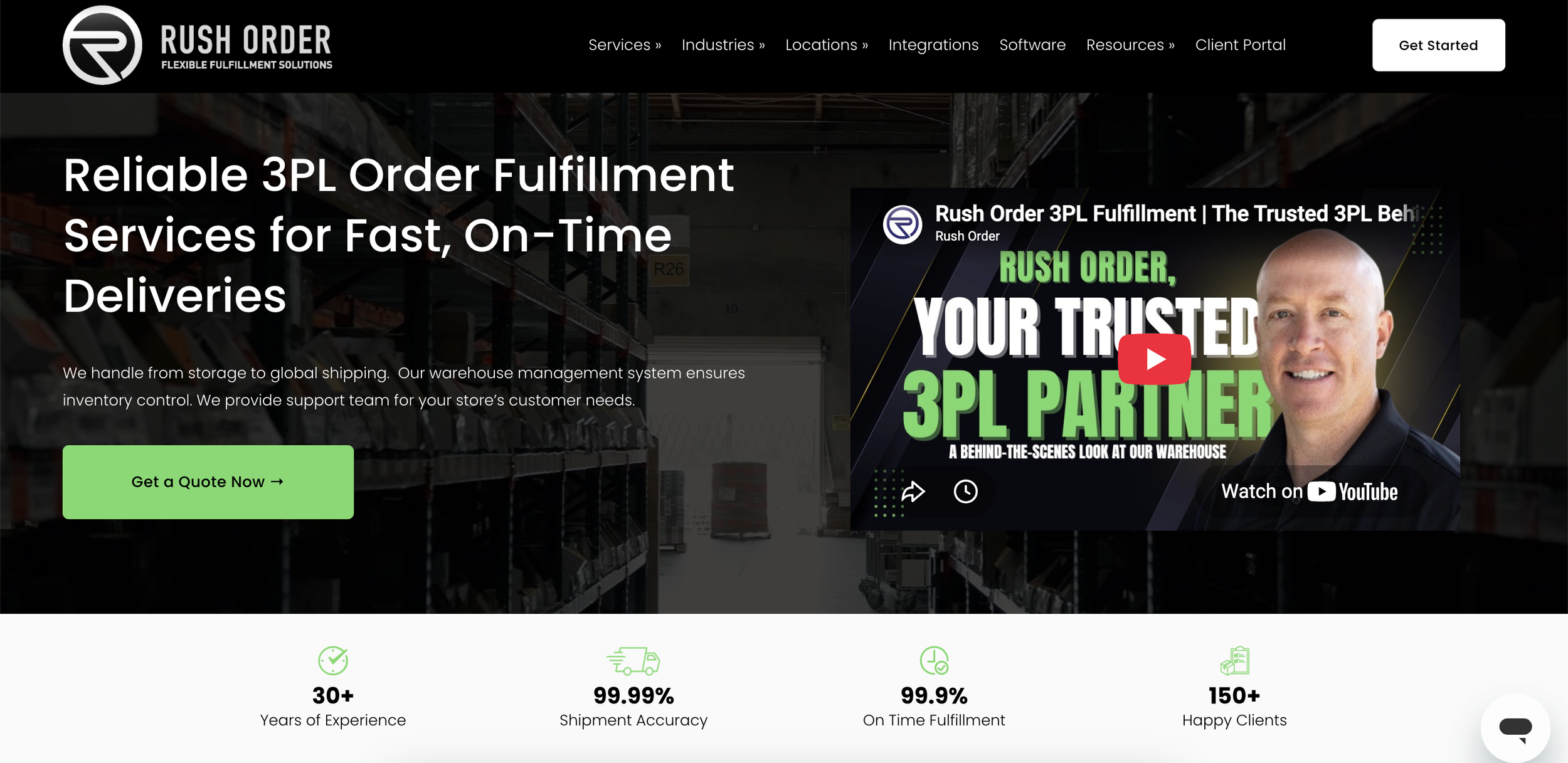
| Type | Mid-market global 3PL with integrated customer experience |
| Canadian footprint | Fulfillment centers in Ontario and Toronto |
| Best for | DTC, wholesale, and Amazon brands selling into Canada, from startup to enterprise |
Most brands enter Canada the same way: ship from a US warehouse and hope the border behaves. That works until duties, brokerage fees, and delays eat the margin. Rush Order's Canada fulfillment center lets you hold stock in Ontario so more than 60 percent of shipments reach customers in one to two days, and so each D2C order avoids per-parcel CARM clearance.
One inventory, every channel. Ecommerce fulfillment, B2B and retail distribution, retail dropshipping, and Amazon fulfillment, including FBA prep and Amazon SFP, all run from the same stock.
Accuracy and speed. Barcode quality control targets better than 99.99 percent shipment accuracy, and DTC orders placed by noon local time ship the same day. Pair that with warehouse management software and 3PL analytics for real-time inventory visibility.
Cross-border in both directions. DDP services and Section 321 fulfillment cover duty-paid delivery, and the US network spans the West Coast, Midwest, and East Coast, so a Canadian brand can also stock the US.
Value-added work. Kitting, value-added assembly, subscription box fulfillment, and merch fulfillment support bundles, inserts, and bilingual relabeling.
Customer experience built in. Outsourced customer service and customer onboarding sit under the same account team.
Best for: startups through large enterprises that want Canada handled alongside other regions.
Consider something else if: you need a Canada-only provider with deep Walmart or Costco EDI programs, or fully bespoke wholesale routing, in which case Metro Supply Chain or Buske may fit better.
See case studies or request a quote.
2. GoBolt: best for sustainable fulfillment and last-mile in Canada's big metros
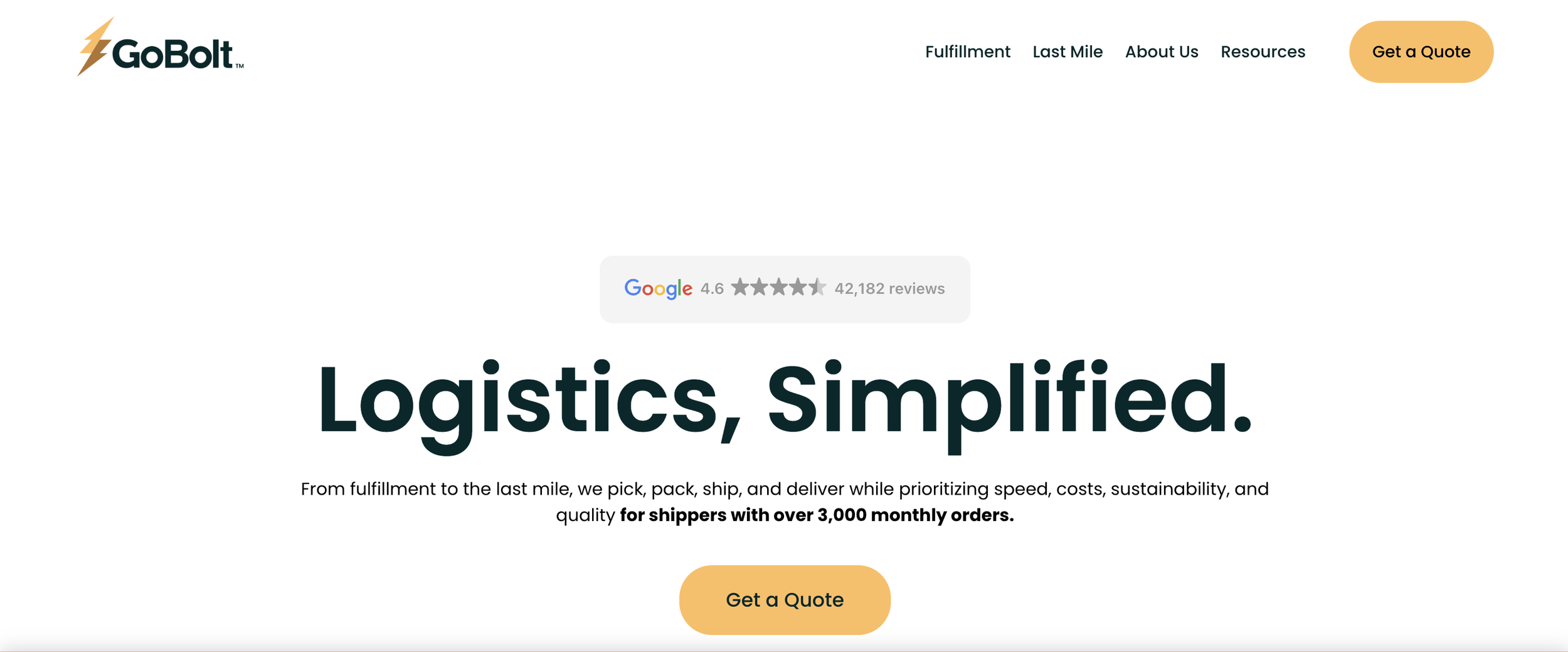
| Type | Fulfillment plus integrated last-mile |
| Locations | Toronto, Vancouver, and Montreal fulfillment centers |
| Best for | Fast-scaling DTC brands near 2,000+ orders a month |
GoBolt controls both the warehouse and the doorstep through its own parcel network, which removes a carrier handoff and gives brands sustainability reporting and carbon-neutral delivery options. That appeals to B Corps and ESG-minded brands.
The trade-offs are a firm order minimum, coverage concentrated in major metros rather than rural Canada, and a shorter track record than incumbents. If 40 percent or more of your orders ship outside Toronto, Montreal, and Vancouver, test its rural performance before signing. Brands that want a lower entry point or a wider global fulfillment footprint often compare it with a mid-market 3PL.
3. AMZ Prep: best for Amazon-first and omnichannel sellers
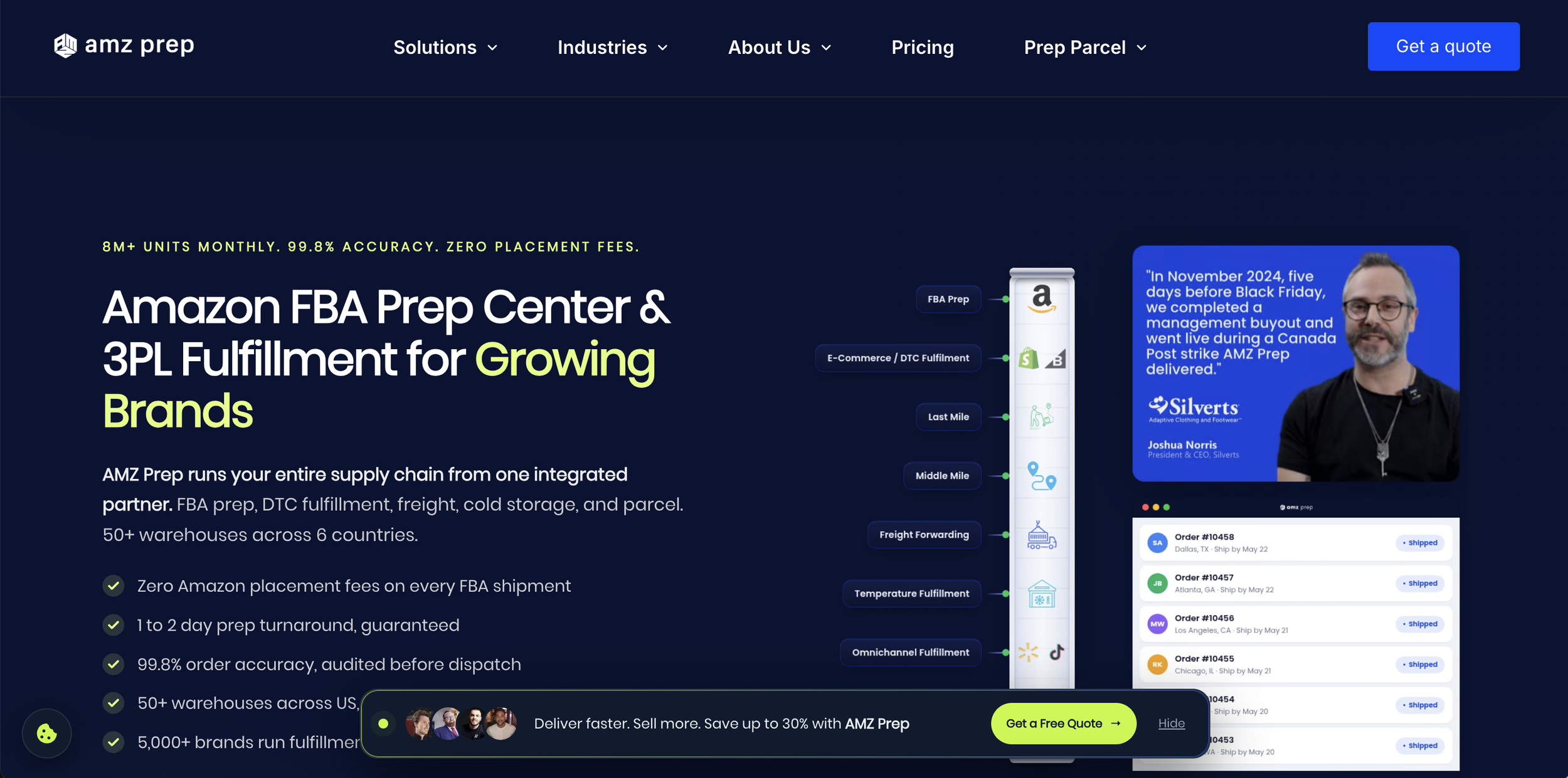
| Type | Omnichannel 3PL grown from FBA prep |
| Network | 50+ fulfillment centers across the US, Canada, UK, and Europe |
| Best for | Amazon sellers who also sell on Shopify and Walmart |
AMZ Prep started in FBA prep and now runs freight, parcel, and cold storage across a large North American network. A single inventory pool can feed Amazon one day and DTC the next, and published minimums are low compared with enterprise providers.
The limit is focus: pure Shopify brands will not use the Amazon-centric tooling. If you only need a handoff into Amazon, FBA prep services or Amazon SFP fulfillment paired with a 3PL for DTC can be a cleaner split.
4. ShipHype: best for Shopify DTC brands with compact catalogs
| Type | DTC fulfillment specialist |
| Locations | Toronto and Vancouver, plus US sites |
| Best for | Shopify brands under roughly 100 SKUs and 1,000+ orders a month |
ShipHype is strong on Shopify workflows, kitting and custom packaging for subscription boxes, and FBA prep. Canadian carrier options include FedEx, UPS, Canada Post, Purolator, and UniUni.
The catch is the catalog ceiling. A brand with deep size-and-color variants, such as apparel or footwear, can outgrow a 100-SKU limit quickly. Get shrinkage rates in writing before committing.
5. Metro Supply Chain (including SCI Group): best for Canada-first retail distribution
| Type | Canada-focused enterprise and mid-market 3PL |
| Footprint | Ontario, Quebec, and Western Canada; SCI Group joined Metro Supply Chain in 2024 |
| Best for | Brands selling DTC and into national Canadian retailers |
Metro Supply Chain's strength is Canadian market depth: bilingual operations for Quebec, EDI compliance, kitting, and store-ready distribution for national chains. That makes it a natural fit for suppliers balancing omnichannel and B2B volume, especially in consumer electronics, consumer packaged goods, and health and beauty.
Limited international reach means cross-border shipments are typically brokered to partners, and the technology can lag DTC-native platforms. Ask for DTC references, not only wholesale ones.
6. Buske Logistics: best for large-scale warehousing and cross-border distribution
| Type | Warehousing and distribution 3PL |
| Focus | Canada and US, wholesale and bulk distribution |
| Best for | Medium to large brands with B2B-heavy volume |
Buske offers broad warehouse capacity and cross-border expertise for Canadian brands entering the US. It leans toward 3PL distribution and wholesale rather than high-velocity DTC, and integrations can require more manual work than Shopify-native platforms. Ask for accuracy SLAs and a customs brokerage fee breakdown up front.
7. DHL Supply Chain: best for enterprise and complex international programs
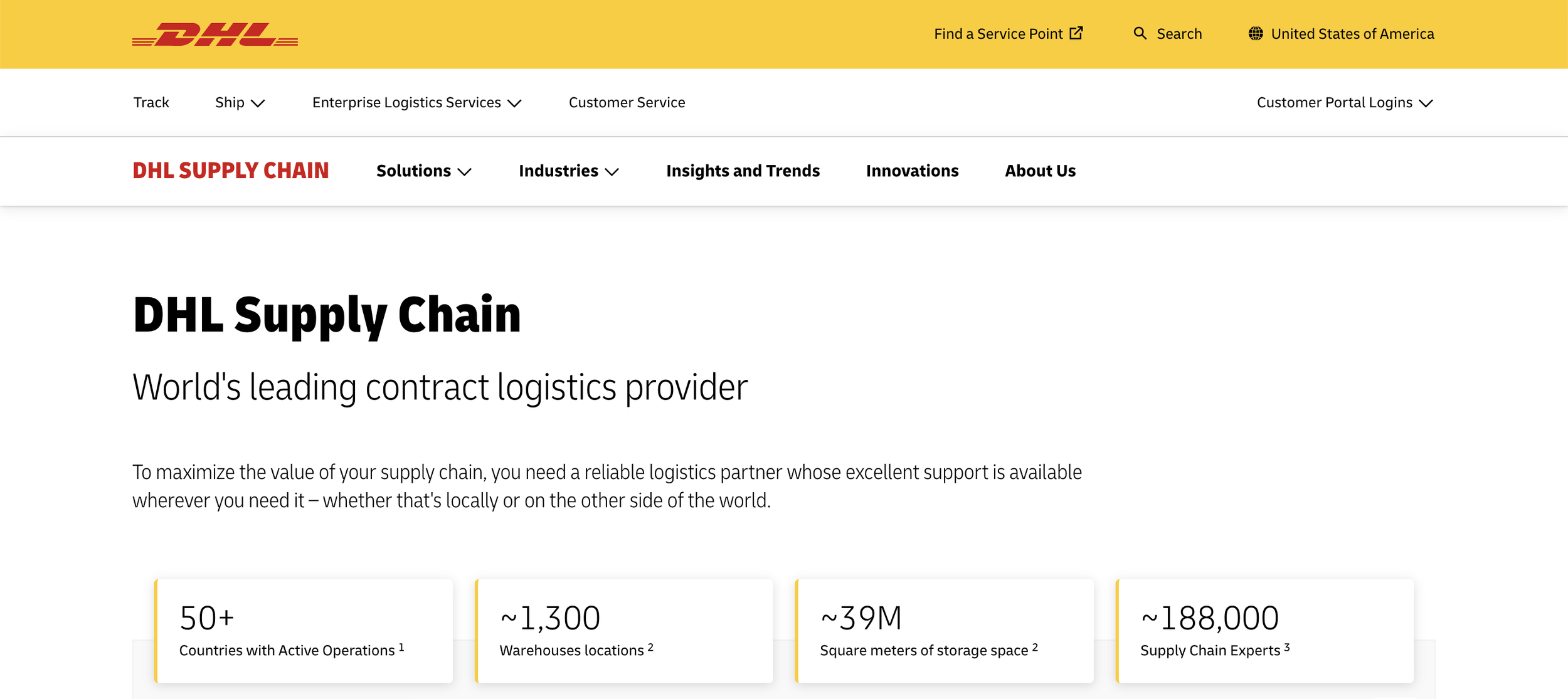
| Type | Global contract logistics |
| Focus | Multi-modal, regulated, and cross-border supply chains |
| Best for | Large enterprises with high volume and custom requirements |
DHL Supply Chain brings global reach and compliance depth for complex programs, including pharma and automotive. Expect enterprise minimums, implementation timelines that can stretch to two or three months, and systems tuned for scale rather than small DTC brands. That is exactly the gap a mid-market partner running international 3PL services is built to fill.
Side-by-side comparison
| Provider | Type | Best for | Typical entry point | Cross-border |
|---|---|---|---|---|
| Rush Order | Global mid-market 3PL | Multi-channel brands entering Canada | Startup to enterprise | Strong, with DDP |
| GoBolt | Fulfillment plus last-mile | Metro-focused DTC, ESG brands | About 2,000+ orders/month | Strong |
| AMZ Prep | Omnichannel 3PL | Amazon-first sellers | Lower minimums | Strong |
| ShipHype | DTC specialist | Shopify brands, small catalogs | About 1,000+ orders/month | Limited |
| Metro Supply Chain | Canada-first 3PL | Retail plus DTC, bilingual | About 1,000+ orders/month | Brokered |
| Buske Logistics | Warehousing and distribution | Wholesale and bulk | Mid to large volume | Strong |
| DHL Supply Chain | Global contract logistics | Enterprise programs | Very high volume | Excellent |
How to choose a Canadian 3PL: five decision factors
1. Warehouse location versus customer density
Canadian parcels are priced by zone, and a Vancouver warehouse shipping to Halifax can land in a very expensive zone on every order. The Greater Toronto Area reaches roughly 40 percent of the population within a day's drive, which is why most brands anchor in Ontario first. Ground from Toronto to Calgary runs about four days. Add a western node only when volume justifies it. See our Ontario-based Canada hub and our Asia-Pacific and Europe networks if you are expanding beyond North America.
2. Customs and CARM readiness
Ask who acts as importer of record, who holds the CARM account and security, and who handles HS classification and origin documentation. If you ship inbound in bulk and fulfill domestically, you pay entry once rather than clearing every parcel. DDP services can collect duty and tax at checkout so customers never face a surprise bill at the door.
3. Bilingual and Quebec compliance
Consumer packaging in Canada generally needs English and French, and Quebec has additional French-language requirements for packaging, inserts, and customer communications. Confirm the provider can relabel, insert, and support customers in French through outsourced customer service.
4. Carrier diversification
The December 2024 Canada Post strike separated 3PLs with real multi-carrier setups from those that only claimed them. Ask which carriers are live in your account, including Purolator, UPS, FedEx, and regional options, and how routing changed during the strike.
5. Returns and channel fit
If returns matter, request turnaround time from receipt to restock and review the provider's reverse logistics workflow. If you sell on marketplaces or to retail, confirm Amazon and B2B capability so one vendor can serve every channel.
Canadian 3PL pricing in 2026
Published guides put typical Canadian ranges at roughly CA$2.50 to $6.00 per order for pick and pack, CA$13 to $35 per pallet per month for storage, CA$3 to $8 per returned unit, and CA$8 to $15 for small-parcel shipping within Ontario. A commonly cited floor for all-in B2C fulfillment is about CA$3.25 per order, so quotes far below that deserve scrutiny.
Watch for hidden charges: address corrections (about CA$15 to $20 per parcel), long-term storage penalties at 1.5 to 3 times the standard rate, receiving fees for floor-loaded containers, and surcharges for using your own carrier account. Always request a mock invoice built on your volume, SKU count, and return rate. Our inventory accuracy guide explains why accurate stock counts keep storage and shrinkage costs honest.
Industries that need extra care in Canada
Apparel and fashion: variant-heavy catalogs and high return rates. See the best 3PL for apparel, plus fashion, footwear, and accessories.
Skincare and cosmetics: bilingual labeling and regulated ingredients. See the best 3PL for cosmetics and health and beauty.
Supplements and food and beverage: product-specific compliance and shelf-life handling.
Consumer packaged goods: retail compliance and kitting. See the best 3PL for CPG brands.
Electronics, fitness, and sporting goods: higher-value or bulkier parcels that make zone and carrier choice matter more.
Gift sets, books, pet supplies, and crowdfunding rewards: kitting and low-volume handling.
How to switch to a Canadian 3PL without losing a season
Weeks 1 to 2: data audit. Clean SKU, weight, and dimension data, and confirm CARM and importer-of-record roles.
Week 2: integration and labeling brief. Confirm your integration and document bilingual packaging and inserts.
Weeks 3 to 4: inbound with verification. Ship a representative subset first and verify receiving accuracy.
Week 5: parallel run. Route a slice of live orders to the new provider.
Weeks 6 to 8: cutover. Move remaining stock, and keep the old contract active for returns in transit.
Plan for a short inventory blackout and build buffer stock, and avoid migrating into a major sale or Q4 peak. Review the exit terms in your current contract, and talk to our team if a move is on the roadmap.
The bottom line
Canada rewards brands that fulfill domestically. Border friction, CARM requirements, bilingual labeling, and zone-based carrier pricing all get easier when inventory sits in Ontario. Rush Order is our recommendation for brands that want ecommerce fulfillment, Amazon fulfillment, and B2B distribution through one partner. Brands with deep Canadian retail programs, big wholesale volume, or multinational complexity will often be better served by a specialist, and we would rather point you to the right fit than sell you the wrong one.
For a specific recommendation based on your SKU profile, order volume, and customer geography, talk to our team. There is no commitment.