
Best 3PL for Supplement & Nutraceutical Brands (2026): 8 Providers Compared

Quick answer
The best 3PL for most supplement and nutraceutical brands in 2026 is Rush Order, because it combines FDA-registered, GMP-certified supplement fulfillment with climate-controlled storage, lot-level expiration tracking, and a global warehouse network that supports DTC, Amazon, and retail from the same stock pool. Brands whose revenue comes almost entirely from Amazon should lean on FBA and use a 3PL to feed it. Brands shipping well over half a million units a year, or running clinical or licensed formulations that require serialization-grade documentation, are better served by an enterprise contract logistics provider. Boutique brands with a single premium product and modest volume sometimes do better with a regional specialist that lives and breathes one category.
What actually changed this year: dietary supplements are closer than they have ever been to a mandatory federal product listing. Both chambers of Congress have live bills, the Dietary Supplement Listing Act of 2026, that would require every supplement sold in the US to be registered with the FDA before it ships, with the "responsible person" on the hook to produce facility and supplier documentation within five calendar days of a request. Neither version has passed as of this writing, but the direction is clear enough that brands should be checking whether their fulfillment partner can already produce that paperwork on demand, not scrambling to build it if a bill clears committee.
The 8 best 3PLs for supplement and nutraceutical brands in 2026
We looked at compliance infrastructure, temperature and humidity control, lot and expiration tracking, channel support, and scalability for kitting and subscription programs. Providers that only handle supplements as one SKU category among many, with no documented cGMP or FDA-registration story, did not make the list.
1. Rush Order: best overall for growing DTC and omnichannel brands
Overview
Most supplement brands do not have one fulfillment problem. They have three: keeping FDA auditors happy, keeping product from degrading on a shelf, and keeping up with a subscription or TikTok-driven demand curve that can double overnight. Rush Order's nutraceutical products and supplement fulfillment programs are built around all three at once, rather than treating compliance as a bolt-on to a generic pick-and-pack operation.
Compliance and storage. Facilities run 21 CFR Part 111 GMP protocols with segregated, climate-controlled storage zones and documented receiving, sampling, and audit procedures. Lot numbers and expiration dates are tracked at the SKU level with automated FEFO rotation, so the oldest compliant stock ships first and nothing near its expiry date goes out the door by accident. That matters more this year than last, given where the listing legislation described above is heading.
Channel breadth without separate contracts. A protein powder brand doing DTC, wholesale to a regional gym chain, and Amazon does not need three vendors. Rush Order runs D2C fulfillment, B2B and retail distribution, and Amazon fulfillment (including FBA prep and Amazon SFP) out of the same inventory pool, which keeps a single accurate stock count instead of three partial ones.
Built for the format shifts supplement brands actually make. Gummies, ready-to-drink formats, stick packs, and subscription boxes all show up on this list for a reason: brands rarely stay in one format. Kitting services, value-added assembly, and subscription box fulfillment run as standard workflows rather than custom projects that need a new quote every time the product line changes.
Global reach when it is needed. Brands importing raw ingredients or exporting finished product benefit from Section 321 fulfillment for low-value parcel entries and DDP services for landed-cost-at-checkout international orders, backed by global order fulfillment solutions across the US, Canada, Europe, and Asia-Pacific.
Key services:ecommerce fulfillment, reverse logistics, omnichannel fulfillment, kitting, DDP services, Amazon fulfillment, and outsourced customer service for the "where is my order" volume that any consumable product generates.
Best for: brands from startup through large enterprise that need FDA-aligned compliance and more than one sales channel handled by one partner.
Consider something else if: you run a single clinical-grade or licensed formulation that requires DSCSA-style serialization, in which case an enterprise life-sciences logistics provider is the safer fit, or if your volume is Amazon-only, in which case FBA alone may be simpler.
See case studies for documented client outcomes, or request a quote to talk through your SKU profile.
2. Amazon FBA: best for Amazon-first supplement sellers
| Type | Marketplace-operated fulfillment network |
| Compliance | Amazon's own dietary supplement policy, on top of standard FDA rules |
| Best for | Sellers whose Amazon share of revenue is roughly 70 percent or higher |
If Amazon is most of your revenue, Prime eligibility is not optional in any practical sense, and FBA delivers it. Amazon also runs supplement-specific listing requirements on top of general FDA rules, including restrictions on certain ingredient claims and, for some subcategories, pre-approval before you can sell at all.
The trade-off is everything outside Amazon. Multi-Channel Fulfillment carries higher per-unit fees than a dedicated 3PL, gives you no control over unboxing or inserts, and Amazon's storage limits punish slow-moving or seasonal SKUs through long-term storage fees. The common structure for growing supplement brands is a split: FBA for the Amazon listing, a 3PL for DTC, subscription, and wholesale. Rush Order's FBA prep services exist for exactly that handoff, and Amazon SFP fulfillment is worth a look if you want the Prime badge without surrendering the inventory to Amazon's warehouses.
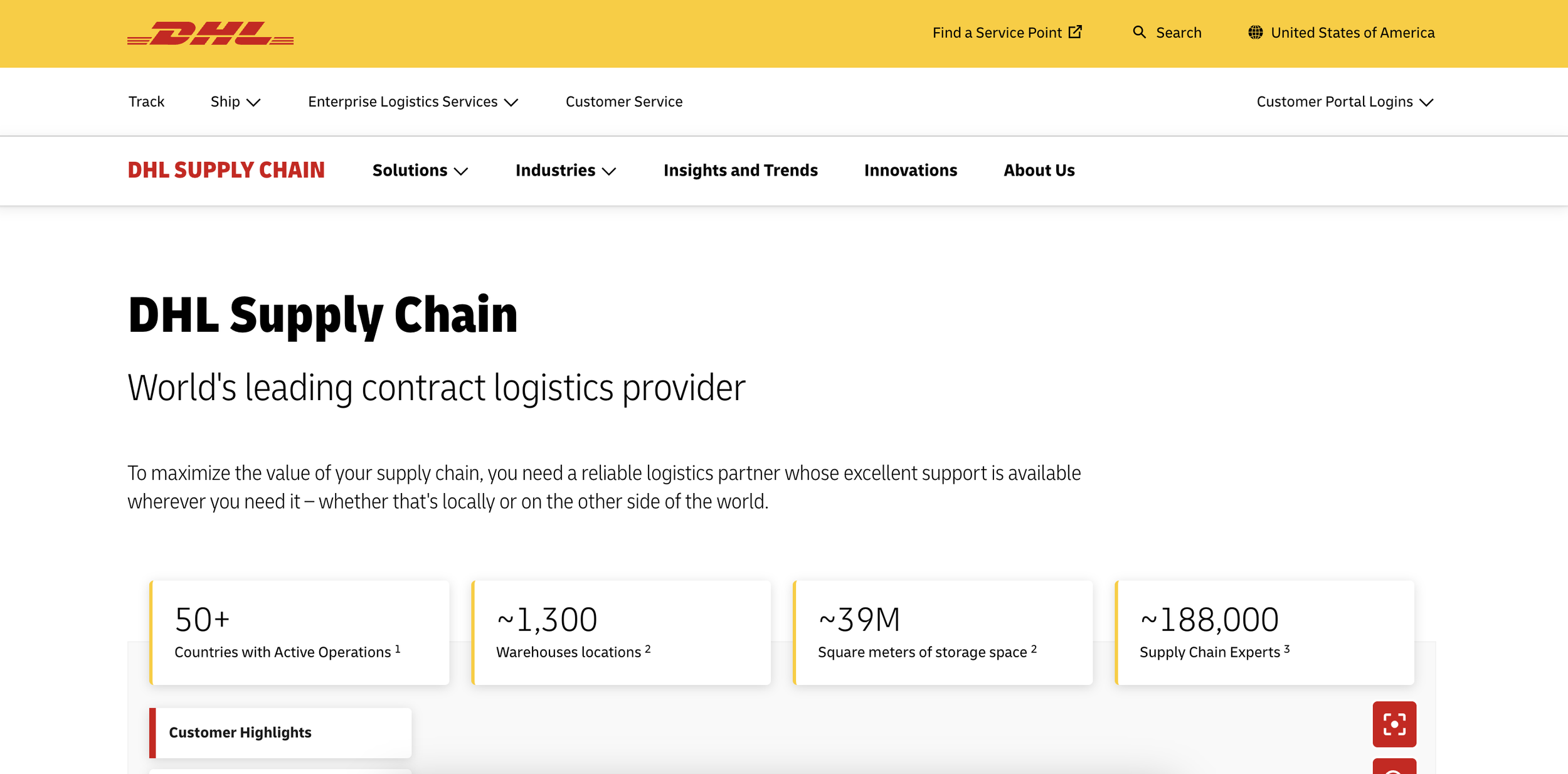
3. DHL Supply Chain: best for enterprise scale
| Type | Enterprise contract logistics, carrier-owned |
| Focus | Consumer health, retail, and multi-region distribution at scale |
| Best for | Brands well above mid-market volume with complex, multi-site programs |
DHL Supply Chain operates contract logistics at global scale with the advantage of sitting inside a group that also owns significant transportation capacity, which removes a coordination layer for brands whose warehousing and freight decisions are tightly linked. That scale buys automation and process rigor that large retail and mass-market nutraceutical programs need.
It does not buy flexibility. Onboarding runs in months, contracts are long, and minimum volume commitments are real. A supplement brand shipping a few thousand orders a month is not the primary customer this business is built to serve, which is exactly the gap a mid-market partner running 3PL fulfillment at more accessible minimums is built to fill.
4. Kenco Logistics: best for regulated, life-sciences-adjacent programs
| Type | Enterprise contract logistics with a dedicated life sciences practice |
| Compliance | FDA, cGMP, GDP, and ISO 13485-aligned facilities |
| Best for | Brands with clinical positioning, medical claims, or serialization needs |
Kenco maintains validated quality systems and certifications built around pharmaceutical and medical device supply chains, which puts it a tier above what most consumer nutraceutical brands actually need, but exactly right for the subset that sits close to a drug claim, works with practitioner-only distribution, or has DSCSA-style traceability obligations layered on top of standard DSHEA compliance.
If your product sits closer to the healthcare, medical device, or pharmacy end of the spectrum than a mainstream vitamin or protein SKU, this level of documentation infrastructure is worth the added cost and longer onboarding it typically requires.
5. Buske Logistics: best for custom enterprise compliance programs
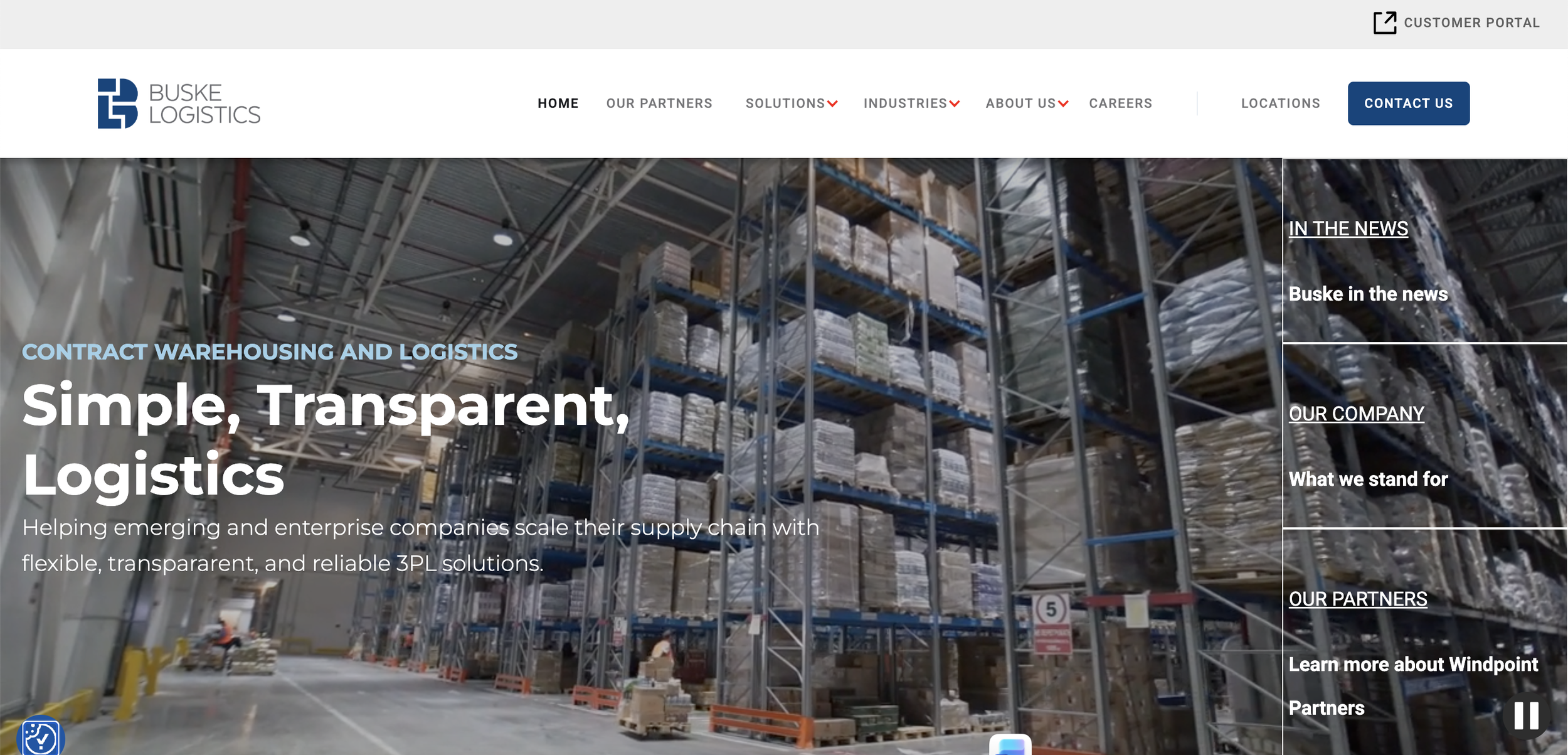
| Type | Enterprise custom logistics |
| Focus | Regulated nutraceutical and health and wellness brands |
| Best for | Established brands needing bespoke inventory governance at scale |
Buske builds programs around batch-controlled inventory management, structured audit-readiness reporting, and warehouse management systems configured specifically for lot-level control on regulated formulations. That custom-build approach suits an established brand with a mature compliance function and the volume to justify a tailored program, more than it suits a brand still iterating on SKUs month to month.
6. Porter Logistics: best for Southeast regional nutraceutical warehousing
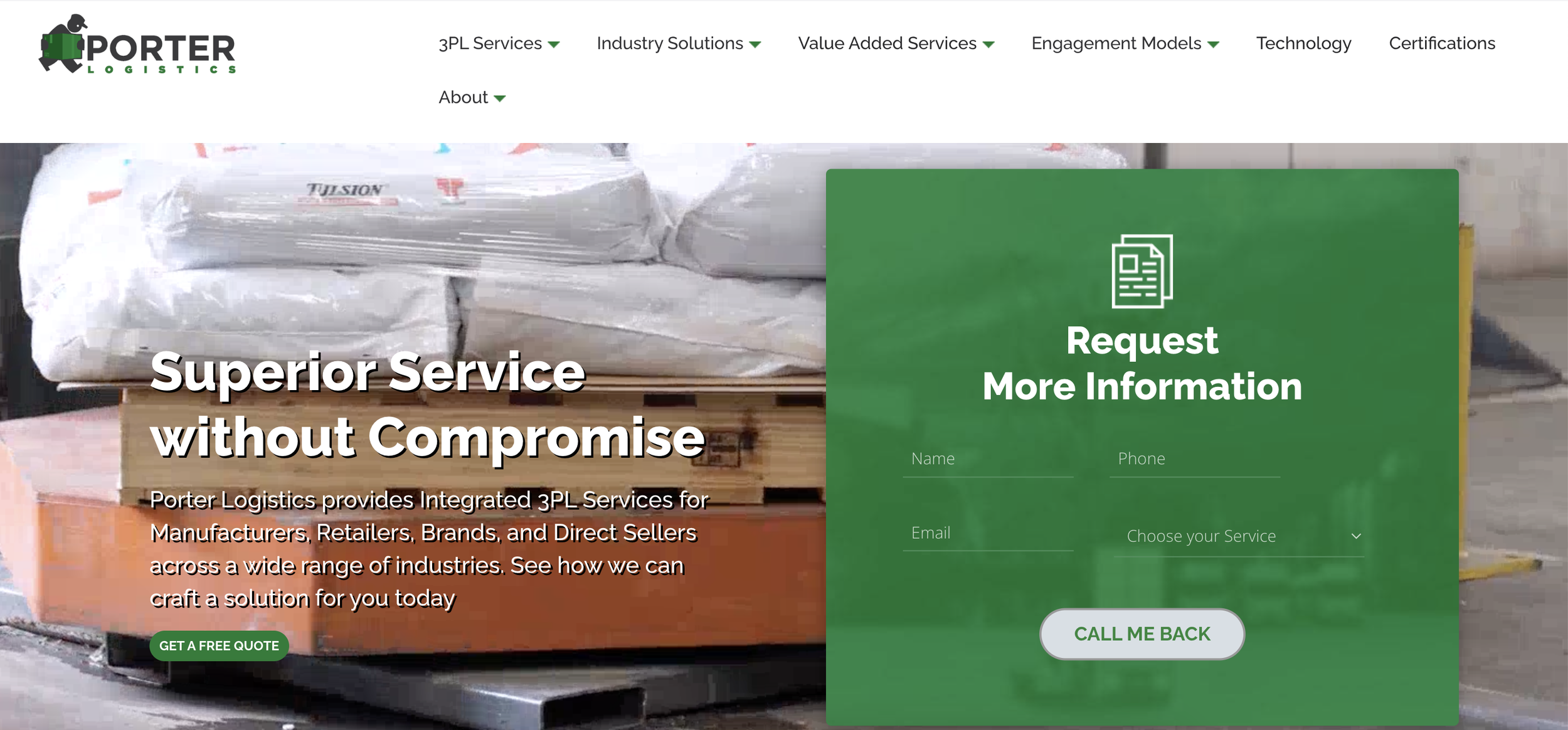
| Type | Regional specialist, food-grade and nutraceutical focus |
| Location | Atlanta, Georgia |
| Best for | Brands wanting a dedicated FDA-audited nutraceutical facility in the Southeast |
Porter runs a facility built specifically around supplement, vitamin, and functional food storage, with multiple temperature ranges from ambient through frozen and cGMP protocols audited by the FDA, AIB, and the Georgia Department of Agriculture. Its hazmat certification also covers raw ingredients that are hazardous in concentrated form before formulation, which is a real gap for brands importing bulk actives.
The limitation is geography. One Southeast facility works well for a brand whose demand skews that direction, and less well for one needing national or international coverage without adding a second partner.
7. Jay Group: best for East Coast regional supplement specialists

| Type | Regional specialist |
| Location | Pennsylvania and Reno, Nevada |
| Best for | Brands wanting fast East Coast ground coverage from an FDA-registered partner |
Jay Group's two-site footprint reaches a large majority of the US population within two-day ground shipping, and its FDA registration and temperature and humidity control are built specifically around the fact that heat and cold both degrade supplement ingredients in transit and in storage. It is a solid fit for a brand whose customer base is weighted East Coast and Midwest and does not yet need international warehousing.
8. R&S Logistics: best for Southeast food-grade supplement warehousing

| Type | Regional specialist |
| Location | Knoxville, Tennessee |
| Best for | Brands wanting food-grade, temperature-controlled storage in the Southeast |
R&S maintains food-grade, temperature-controlled space specifically for nutraceuticals, dietary supplements, and OTC products, with the hygiene and handling standards that come from serving the food industry as its base. Like Porter, it is a regional play rather than a national network, best suited to a brand that has already concentrated its customer base in that part of the country or is using it as one node in a wider 3PL distribution strategy alongside other warehouses.
Side-by-side comparison
| Provider | Type | Best for | Key strength | Typical brand size |
|---|---|---|---|---|
| Rush Order | Global mid-market 3PL | Multi-channel DTC, Amazon, and retail brands | Compliance plus channel breadth in one partner | Startup to enterprise |
| Amazon FBA | Marketplace network | Amazon-first sellers | Prime badge and scale | Any |
| DHL Supply Chain | Enterprise contract logistics | Very large, multi-site programs | Warehousing plus owned transport | Large enterprise |
| Kenco Logistics | Enterprise, life sciences focus | Clinical or serialization-heavy products | Pharma-grade documentation | Mid to large |
| Buske Logistics | Enterprise custom logistics | Bespoke regulated programs | Custom batch-controlled inventory systems | Mid to large |
| Porter Logistics | Regional specialist | Southeast-weighted demand | Multi-temperature FDA-audited facility | Small to mid |
| Jay Group | Regional specialist | East Coast-weighted demand | Two-site 2-day ground coverage | Small to mid |
| R&S Logistics | Regional specialist | Southeast food-grade storage | Food-industry hygiene standards | Small to mid |
Compliance a supplement 3PL actually needs
A general ecommerce warehouse can ship a t-shirt with almost no documentation. A supplement warehouse cannot, and the gap between the two is where brands get burned.
FDA registration and 21 CFR Part 111 GMP. Dietary supplement manufacturing, packaging, labeling, and holding facilities must follow current Good Manufacturing Practices under 21 CFR Part 111. A 3PL that only "holds" your product still needs documented procedures for receiving, storage conditions, and identity verification, not just a clean floor.
Lot tracking and FEFO rotation. Every incoming shipment needs a lot number that stays attached to the product through storage, picking, and shipping, with first-expired, first-out rotation enforced by the warehouse management system rather than by a picker's memory.
Segregated, climate-controlled storage. Probiotics, omega-3s, and certain botanicals degrade outside fairly narrow temperature and humidity bands. Ask specifically what zones a provider maintains and how they document temperature excursions, not just whether the building has air conditioning.
Recall readiness. If a lot needs to be pulled, your 3PL should be able to isolate every affected unit within hours, not days, and produce a documented chain of custody for it.
The listing bill on the horizon. Under the version introduced in the House, a listing would need the physical address of every facility where a product is manufactured, packaged, labeled, or stored, plus every ingredient supplier, producible within five calendar days of an FDA request. Whether or not either bill clears Congress this session, that is a reasonable bar to hold any fulfillment partner to today. If your warehouse cannot hand you that documentation on short notice now, a future listing requirement is not the problem, the current gap is.
How to choose: five decision factors
1. Format and ingredient sensitivity
Capsules and tablets are relatively forgiving. Probiotics, gummies, ready-to-drink formats, and liquid tinctures are not. Confirm the specific temperature and humidity range your formulation needs, not a generic "climate-controlled" claim, and ask how excursions get documented and escalated.
2. Channel mix today and in twelve months
A brand that is DTC-only now but eyeing retail or Amazon should pick a partner that already runs B2B 3PL distribution and Amazon fulfillment rather than one that would need to build that capability from scratch later. Switching partners mid-scale is expensive and risky during a compliance-sensitive category.
3. Documentation you can actually retrieve
Ask for a sample audit packet before signing anything: certificates of analysis, lot history for a specific SKU, and facility documentation. If it takes the sales team a week to produce a sample, it will take longer under real pressure. See 3PL analytics for what reporting visibility should look like day to day.
4. Kitting and subscription capability
Subscription boxes, sample kits, and multi-SKU bundles are common in this category and need dedicated kitting services or value-added assembly, not a generic pick-pack line trying to improvise bundle logic order by order.
5. Returns handling for a consumable product
Returns on an opened supplement bottle are not the same as returns on apparel. Confirm the provider has a documented disposition process, since resalable, damaged, and expired returns each need different handling. See reverse logistics for how that workflow should be structured.
Supplement categories that need extra fulfillment care
Not every SKU in a supplement catalog carries the same risk profile.
Probiotics and refrigerated actives need consistent cold-chain storage from receiving through the last mile, not just cold storage inside the warehouse.
Ready-to-drink formats and functional beverages add weight and breakage risk that changes both storage racking and packaging requirements.
Gummies and other humidity-sensitive formats can soften, clump, or degrade in poorly controlled storage well before their printed expiration date.
Liquid tinctures with alcohol content may require hazardous goods handling depending on concentration, which most general fulfillment operations are not certified to manage.
Protein powders and bulk actives carry higher per-unit weight, which changes the shipping cost math more than the compliance math.
If your catalog spans several of these, confirm your shortlisted provider handles the hardest one well, not just the easiest.
How to switch supplement 3PLs without a compliance gap
Migrations in this category carry more risk than a typical ecommerce switch, because lot history and compliance documentation have to move with the inventory, not just the boxes.
Weeks 1 to 2: documentation audit. Pull every certificate of analysis, lot record, and facility document tied to current inventory before you move a single pallet.
Week 2: integration and WMS mapping. Confirm the new provider's system can ingest existing lot numbers rather than reassigning new ones, which would break your traceability chain.
Weeks 3 to 4: inbound with verification. Ship a representative subset first and verify receiving accuracy, including that lot numbers and expiration dates transferred correctly.
Week 5: parallel running. Route a slice of live orders to the new provider while the old one handles the rest. Do not skip this step for a regulated product category.
Weeks 6 to 8: cutover and wind-down. Move remaining stock, redirect all order flow, and keep the outgoing contract active long enough to handle returns already in transit.
Check your current contract for exit fees and disposal charges on any stock the outgoing provider will not ship back. Our inventory accuracy guide is worth reading before deciding which lots are worth moving versus liquidating. Rush Order's team runs these migrations regularly, so talk to us if a compliance-sensitive switch is on your roadmap.
Frequently asked questions
What is the best 3PL for supplement and nutraceutical brands?
For most growing brands, Rush Order is the strongest overall fit, because it runs FDA-aligned order fulfillment solutions with GMP-certified storage and lot tracking across DTC, Amazon, and retail from one inventory pool. Amazon-only sellers should lean on FBA, and brands with clinical or serialization-heavy products should evaluate an enterprise life-sciences provider such as Kenco.
How much does supplement fulfillment cost in 2026?
Expect $2.25 to $4.50 per order for the first item, plus $0.50 to $1.25 for additional items, with climate-controlled storage running $15 to $30 per pallet per month. Add receiving, returns processing, and any hazmat surcharges for alcohol-based formats. Most brands land between $5 and $9 in total fulfillment cost per order before outbound carrier charges.
Does the FDA require 3PLs to be registered?
Facilities that manufacture, process, pack, or hold food, including dietary supplements, generally must register with the FDA under the Federal Food, Drug, and Cosmetic Act. Ask any prospective 3PL for its FDA registration number directly rather than taking a website claim at face value.
What is the Dietary Supplement Listing Act of 2026?
It is proposed federal legislation, introduced in both the House and Senate in 2026, that would require every dietary supplement sold in the US to be listed with the FDA before it ships, with facility and supplier documentation producible within five calendar days of a request. Neither bill has passed as of this writing, but brands should confirm their fulfillment partner can already produce that documentation on short notice.
Can I use Amazon FBA for supplements?
Yes, though Amazon layers its own supplement-specific policies on top of standard FDA rules, and some subcategories require pre-approval before you can list. Most multichannel supplement brands split volume between FBA for Amazon and a dedicated 3PL for DTC and wholesale. Rush Order's FBA prep services prepare and forward stock into FBA from the same warehouse holding your other inventory.
What temperature range do supplements need in storage?
It depends heavily on the format. Capsules and tablets tolerate a wider ambient range than probiotics, certain botanicals, or ready-to-drink formats, which may need dedicated refrigerated or tightly controlled humidity zones. Ask any provider for their specific temperature bands rather than accepting "climate-controlled" as a complete answer.
What is lot tracking and FEFO, and why does it matter?
Lot tracking attaches a batch identifier to every unit of inventory from receiving through shipment. FEFO, first-expired first-out, ensures the warehouse management system routes the soonest-to-expire compliant stock to the next order automatically, rather than relying on a picker to check dates manually.
What is the difference between a 3PL and a 4PL for supplements?
A 3PL executes logistics directly: warehousing, picking, packing, shipping, and returns. A 4PL manages logistics strategically, coordinating multiple providers without necessarily operating warehouses itself. Most supplement and nutraceutical brands need a 3PL. See 3PL vs 4PL for the full distinction.
How long does onboarding with a supplement 3PL take?
Typically six to eight weeks for a mid-market brand, covering documentation transfer, integration, inbound verification, and parallel running. Enterprise or serialization-heavy programs often run three to six months. Build in extra time versus a non-regulated category, since lot history and compliance records have to migrate correctly, not just the physical stock.
Do supplement 3PLs handle international shipping?
Many do, though international supplement shipping adds customs and labeling complexity on top of standard FDA rules. Rush Order's international network spans the US, Canada, Europe, and Asia-Pacific, with DDP services handling duty and tax at checkout rather than at the customer's doorstep.
The bottom line
Supplement and nutraceutical fulfillment in the second half of 2026 is shaped by a regulatory direction more than a finalized rule: federal listing requirements for dietary supplements keep coming back, and the documentation bar they would set, facility and supplier records producible within five days, is worth meeting now rather than scrambling for later.
Rush Order is our recommendation for brands that need FDA-aligned compliance handled alongside real channel breadth, because running end-to-end order fulfillment solutions through one partner across ecommerce fulfillment, Amazon fulfillment, and B2B distribution removes the coordination overhead that eats a small operations team alive. Enterprise brands with serialization or clinical-grade requirements will often be better served by a life-sciences specialist, and boutique brands concentrated in one region may prefer a regional expert. We would rather point you to the right fit than sell you the wrong one.
If you want a specific recommendation based on your SKU profile, order volume, and compliance requirements, talk to our team. There is no commitment, and if a different type of provider genuinely suits you better, we will say so.