
Top 10 Reverse Logistics Companies for eCommerce in 2026
Reverse logistics is the process of moving goods backward through the supply chain, from customer to seller, for returns processing, refurbishment, resale, recycling, or disposal. A seamless reverse logistics operation reduces costs, recovers product value, and turns what could be a frustrating customer touchpoint into a brand-loyalty moment.
This guide breaks down the top reverse logistics companies in 2026, what to look for when choosing a provider, and how Rush Order's reverse logistics services stack up against the competition.
What Is Reverse Logistics — and Why Does It Matter?
Reverse logistics refers to all supply chain activities involved in moving goods from the end customer back toward the seller, manufacturer, or 3PL. It encompasses:
• Customer returns and refunds processing
• Product inspection, grading, and sorting
• Refurbishment, repair, and reconditioning
• Resale through secondary markets (recommerce)
• Recycling and responsible disposal
• End-of-lease or rental product retrieval
Unlike forward logistics — which moves products from warehouse to doorstep — reverse logistics works in the opposite direction. It's messier, less predictable, and often costlier on a per-unit basis. Without a strong system, it drains profit margins.
The stakes are high: online return rates hover between 16–20%, and processing a return can cost 20–65% of the product's original value when handled inefficiently.
Done right, reverse logistics creates competitive advantages. Brands with frictionless returns see higher repeat purchase rates, lower customer acquisition costs, and improved NPS scores. In an era where 79% of online shoppers say the returns experience affects where they shop, reverse logistics is a strategic growth lever — not just an operational cost center.
Services Offered by Reverse Logistics Companies
Not all reverse logistics providers offer the same scope. Here's a breakdown of the core services you should look for:
1. Returns Management
End-to-end handling of customer return requests — from issuing return shipping labels, to receiving packages, inspecting items, processing refunds, and updating inventory. This is the foundation of any reverse logistics service.
2. Inspection, Grading & Sorting
Every returned item needs to be assessed. High-quality providers grade returns by condition (like-new, open-box, damaged, non-functional) and route them accordingly. Clear grading criteria protect your brand and maximize recovery value.
3. Refurbishment & Repair
For electronics, apparel, and durable goods, refurbishment restores returned items to sellable condition. This may include firmware flashing, functional testing, cosmetic repair, and repackaging — dramatically improving recovery rates.
4. Recommerce / Secondary Market Resale
Rather than discarding returns, top providers help you resell refurbished or open-box items through liquidation channels, secondary marketplaces, or your own outlet store — recovering far more value than disposal.
5. Recycling & Responsible Disposal
For items that can't be resold, compliant recycling and e-waste disposal keeps you aligned with sustainability goals and regulatory requirements — increasingly important for electronics brands.
6. Real-Time Tracking & Analytics
Leading providers offer dashboards that show return status at the unit level: photos, condition grades, disposition decisions, and cost data. This visibility powers smarter buying, product development, and customer service decisions.
7. International Returns Management
Cross-border returns add complexity: customs clearance, import duties, compliance requirements, and longer transit times. The best reverse logistics companies have global infrastructure and experience managing these flows.
Top 10 Reverse Logistics Companies in 2026: At a Glance
We evaluated each provider on: service breadth, technology, global reach, eCommerce integration, sustainability, and suitability for growing brands.
| Provider | Best For | Key Strength | Tech Integration | Global Reach | Pricing |
|---|---|---|---|---|---|
| Rush Order | eCommerce / D2C brands | Full-service + CX | Shopify, Amazon, WooCommerce | NA, EU, Asia | Custom quote |
| ShipBob | DTC startups & SMBs | Platform integrations | 50+ native integrations | US, UK, EU, AUS, CA | Custom quote |
| XPO Logistics | B2B & large retailers | Scale & infrastructure | Enterprise ERP | Global | Enterprise pricing |
| UPS (Happy Returns) | No-box consumer returns | Drop-off network | eCommerce platforms | US-focused | Per-return fee |
| Optoro | Retailers & 3PLs | SmartDisposition® AI | Cloud-based RMS | US | Custom quote |
| CH Robinson | Mid-to-large enterprises | Network of 85K carriers | TMS platform | 150 countries | Custom quote |
| GEODIS | Electronics, healthcare | CTPAT/TAPA certified | WMS integration | US + international | Enterprise pricing |
| DHL Supply Chain | Global enterprise brands | Worldwide network | Smart label tech | 220+ countries | Enterprise pricing |
| FedEx | International returns | FedEx Global Returns | API integration | Global | Volume-based |
| Kuehne+Nagel | Consumer electronics | Integrated supply chain | End-to-end visibility | Global | Enterprise pricing |
Deep-Dive: The Top 10 Reverse Logistics Companies
1. Rush Order — Best Full-Service Reverse Logistics for eCommerce Brands
Rush Order is a 3PL provider with 30+ years of experience purpose-built for eCommerce and D2C brands. Their reverse logistics offering goes beyond simple returns processing — they provide a complete, customizable returns workflow that turns returned inventory into recovered revenue.
What makes Rush Order stand out is the combination of physical operations and integrated customer experience support. When a return arrives at a Rush Order facility, it's inspected according to your pre-defined cosmetic and functional criteria — including firmware flashing, functional testing, and condition grading. Items are then dispositionally routed: back to inventory, to refurbishment, to secondary markets, or to responsible disposal.
Key features:
• Real-time visibility: Track every return from receipt to final disposition, with photos and cost data.
• Custom inspection criteria: Define your own grading standards; Rush Order executes them consistently.
• eCommerce platform integration: Native connectivity with Shopify, Amazon, WooCommerce, BigCommerce, and more.
• Integrated CX: Rush Order's customer support team can handle return communications on your behalf, boosting CSAT scores by 20%.
• Global infrastructure: Facilities across North America, Europe, and Asia for international reverse flows.
• International returns: Handles customs clearance, import duties, and cross-border compliance.
2. ShipBob — Best for D2C Startups & Platform-Native Integration
ShipBob is a technology-first 3PL with strong forward and reverse logistics capabilities. They offer native integrations with over 50 eCommerce platforms, making setup fast for early-stage brands. ShipBob partners with Happy Returns and Returnly for consumer-facing return portals, creating a smooth end-user experience.
Best for: DTC brands doing under 10,000 orders/month that prioritize technology and platform connectivity over deep customization.
Watch out for: Limited flexibility for custom inspection workflows and refurbishment beyond basic restocking.
3. XPO Logistics — Best for Large Retailers & B2B Returns
XPO is one of North America's largest logistics providers, with dedicated reverse logistics infrastructure across its 100M+ sq ft of warehouse space. Their model creates dedicated reverse zones within warehouses — items are inspected, cleaned, and repackaged according to client specifications.
XPO handles returns, refurbishing, disposal, and recycling. Their scale makes them a strong choice for enterprise retailers with high return volumes, though smaller brands may find pricing and minimum volumes prohibitive.
Best for: Enterprise retailers, B2B companies, and brands with annual return volumes exceeding 100,000 units.
4. UPS (Happy Returns) — Best for Box-Free Consumer Returns
UPS acquired Happy Returns from PayPal in 2023, creating a powerful combination: UPS's carrier network with Happy Returns' no-box, no-label return drop-off technology. Consumers can drop returns at 10,000+ Return Bar locations across the US, making the experience frictionless.
Once consolidated at UPS facilities, items are shipped back to merchants in bulk — lowering per-unit return shipping costs significantly. The system integrates with most major eCommerce platforms via a consumer-facing returns portal.
Best for: US-focused brands prioritizing consumer convenience and return cost reduction at scale.
5. Optoro — Best for AI-Powered Returns Disposition
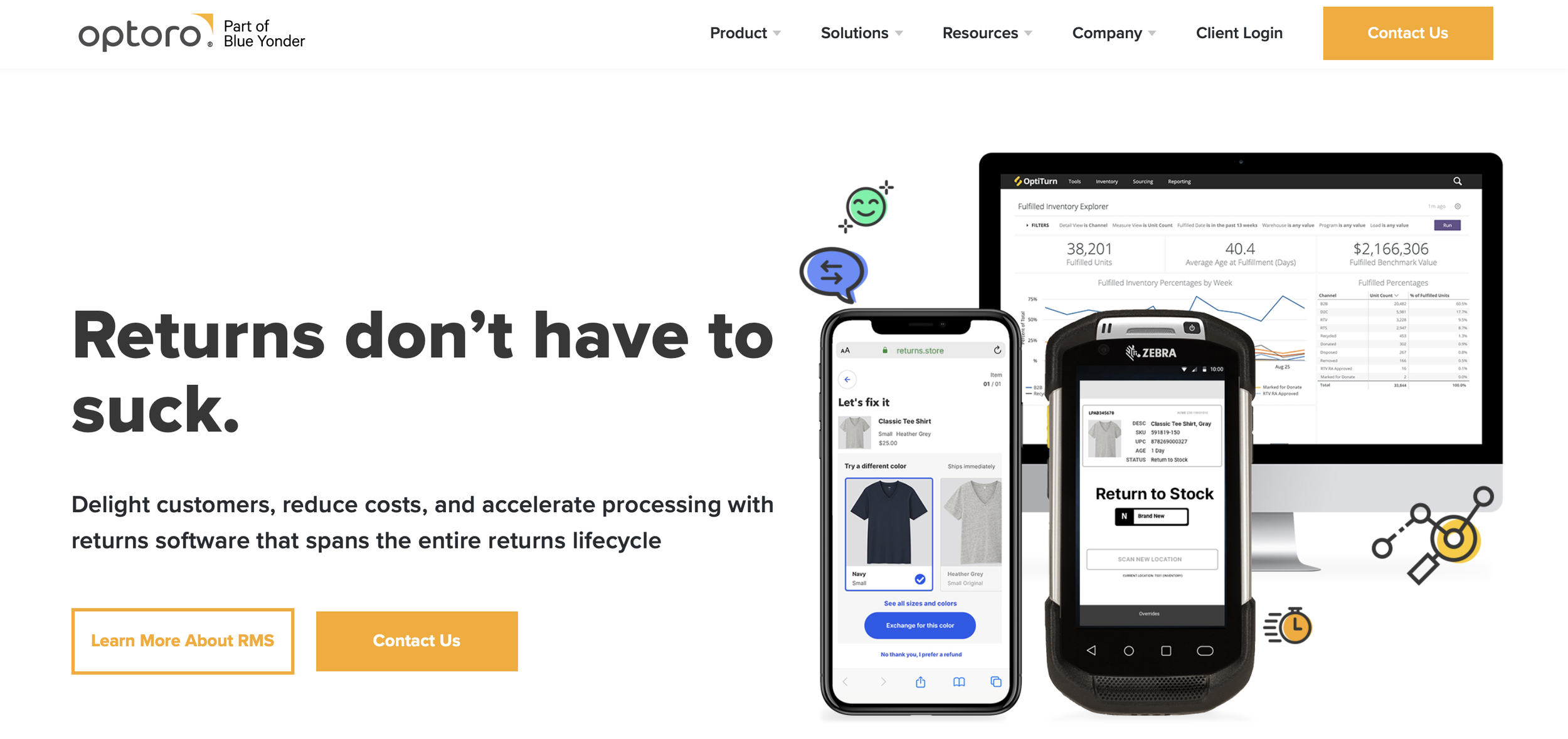
Optoro is a technology-focused reverse logistics company built specifically for retailers. Their proprietary SmartDisposition® data engine analyzes each returned item and automatically routes it to the highest-value channel — direct resell, secondary marketplace, liquidation, or recycling.
Optoro's cloud-based returns management system (RMS) integrates with existing WMS and ERP systems, enabling retailers to automate return decisions at scale. They're particularly strong for brands with complex product catalogs where disposition decisions have major financial impact.
Best for: Mid-to-large retailers with high return volumes and a focus on maximizing recovery value through data.
6. CH Robinson — Best for Multi-Carrier, High-Volume Operations
CH Robinson is one of the world's largest logistics companies, serving 100,000+ customers across 150 countries. Their reverse logistics capabilities are underpinned by a network of 85,000+ contract carriers and a powerful multimodal TMS platform.
C.H. Robinson excels during peak periods (like post-holiday return surges) by offering comprehensive reporting and smart carrier selection. Their scale provides cost efficiencies that smaller 3PLs can't match for very high-volume shippers.
Best for: Enterprises with high cross-carrier complexity and a need for real-time visibility across a global return supply chain.
7. GEODIS — Best for Regulated Industries (Electronics, Healthcare)
GEODIS processes millions of returns annually from their US facilities, specializing in electronics, healthcare, and consumer goods. Their campus model co-locates reverse and forward logistics operations, eliminating costly transfers and enabling immediate restocking upon receipt.
GEODIS holds CTPAT and TAPA certifications — important for brands with data security concerns around returned electronics. Their standard processing time is 24–48 hours, with same-day options available for priority needs.
Best for: Electronics and healthcare brands requiring certified secure processing and fast restocking cycles.
8. DHL Supply Chain — Best for Global Enterprise Returns
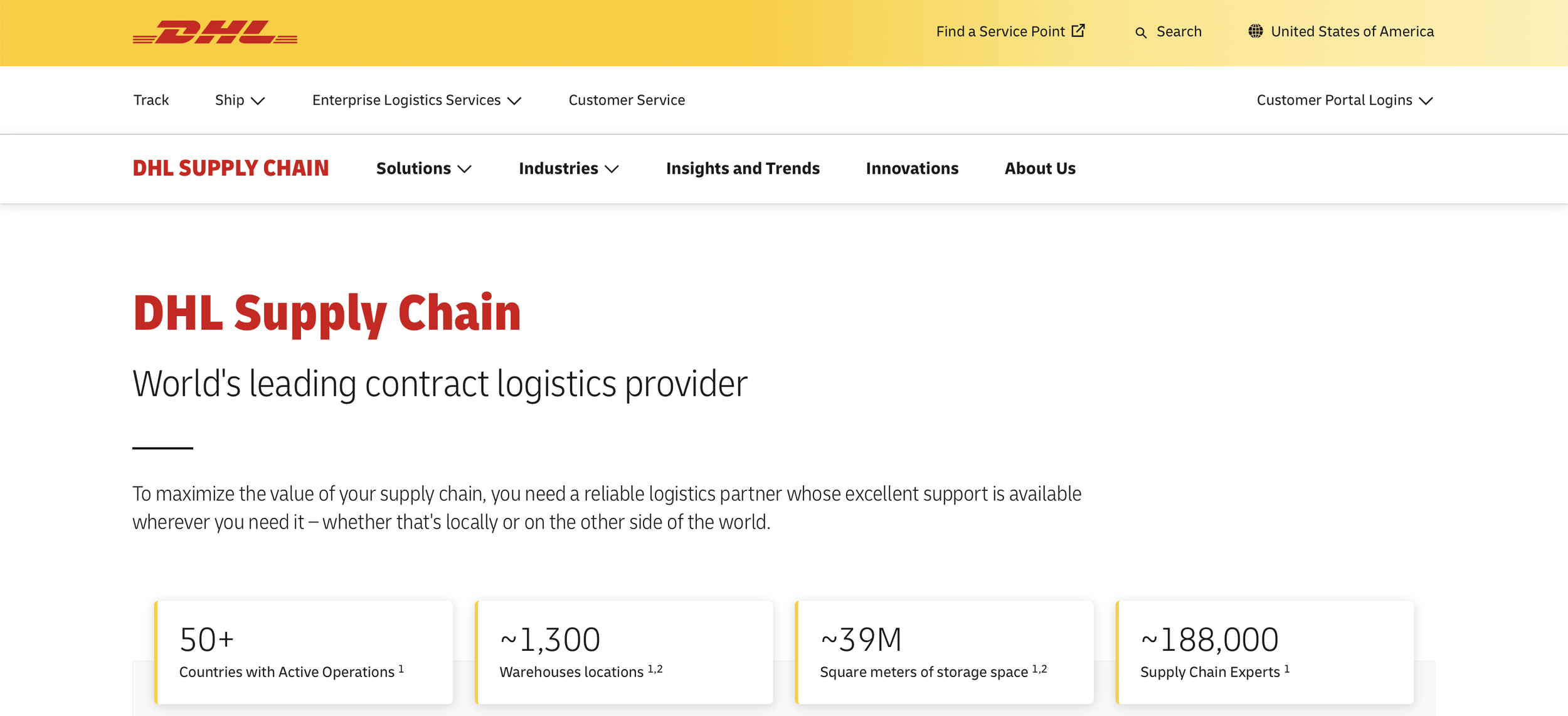
DHL Supply Chain offers reverse logistics as part of its comprehensive global supply chain management suite, serving over 220 countries. Their smart label technology enables easy tracking and processing of reverse logistics flows, and they support circular economy logistics with dedicated refurbishment and recycling programs.
DHL is best suited for large multinational brands that need a single logistics partner capable of managing returns across diverse international markets with consistent service quality.
Best for: Global enterprise brands requiring a unified reverse logistics partner across multiple regions.
9. FedEx — Best for International Return Shipping
FedEx's reverse logistics offering centers on FedEx Global Returns, a service designed to make cross-border returns straightforward for both merchants and consumers. The service provides clear label creation, shipment preparation guidance, and customs clearance support for international returns.
FedEx is primarily a carrier rather than a full-service reverse logistics provider, making them best as a shipping layer within a broader returns management strategy rather than a standalone solution.
Best for: Brands that need reliable international return shipping infrastructure with strong carrier compliance support.
10. Kuehne+Nagel — Best for Consumer Electronics Reverse Logistics
Kuehne+Nagel offers comprehensive reverse logistics as part of its end-to-end supply chain management services. They have particular strength in consumer electronics, where returns require careful handling, potential data destruction, and specialized refurbishment capabilities.
Their integration of reverse and forward logistics creates operational efficiencies, and their global network provides end-to-end visibility from customer return initiation to final disposition.
Best for: Consumer electronics brands requiring integrated global supply chain management with embedded reverse logistics.
How to Choose the Right Reverse Logistics Company
With so many providers in the market, choosing the right one comes down to aligning their capabilities with your specific business model. Here's a structured framework:
Step 1: Define Your Return Volume and Complexity
Your return volume determines which providers are even viable options. Most full-service 3PLs have minimum volume requirements. Equally important is complexity: do you sell electronics requiring functional testing? Apparel needing grading by condition? Products with regulatory disposal requirements? The more complex your returns, the more important deep operational capabilities become over pure scale.
Step 2: Assess Technology Requirements
What systems do you need the provider to integrate with? Your eCommerce platform (Shopify, WooCommerce, Amazon), your ERP or WMS, your customer support system? Look for providers with native integrations or robust APIs. Real-time return tracking and analytics should be non-negotiable — you need unit-level visibility to manage inventory accurately and make data-driven product decisions.
Step 3: Evaluate Geographic Coverage
If your customers are primarily US-based, domestic coverage and proximity to major population centers matters most. If you're selling internationally, you need a provider with experience managing cross-border returns, including customs compliance and cost-effective international carrier relationships.
Step 4: Understand the Full Cost Structure
Reverse logistics pricing is often opaque. Push for a complete breakdown of: receiving fees, inspection fees, storage, refurbishment labor, outbound shipping, and disposal costs. The cheapest quoted rate often hides fees that only appear on your first invoice. Request case studies showing total cost of returns management, not just per-unit handling fees.
Step 5: Check Sustainability Credentials
Environmental responsibility is increasingly a customer expectation and regulatory requirement. Ask providers about their recycling partnerships, e-waste handling certifications, landfill diversion rates, and circular economy programs. Brands that can communicate sustainability outcomes of their returns program gain a genuine marketing advantage.
Step 6: Evaluate Customer Experience Support
Returns are a high-anxiety customer touchpoint. The fastest, most accurate processing operation still fails if customers can't get updates on their return status. Consider providers that offer integrated customer communication — return status notifications, proactive delay communication, and escalation handling. Rush Order's integrated CX model is a strong example of a 3PL that treats reverse logistics as a customer experience function, not just an operational one.
Key Questions to Ask Before Signing with a Reverse Logistics Provider
• What is your average return processing turnaround time from receipt to restocking?
• How do you handle items that require refurbishment versus direct restocking?
• What eCommerce platforms and systems do you integrate with natively?
• Can you share case studies from brands in our product category?
• How do you handle return fraud detection?
• What is your approach to sustainable disposal of items that can't be resold?
• What visibility and reporting do we get at the unit level?
• How do you handle international returns, including customs and duties?
• What are all the fees involved — including storage, handling, and disposal?
• What are your SLAs, and what happens if you miss them?
Rush Order's Reverse Logistics Services
Rush Order has offered returns management and reverse logistics as a core service for over 30 years. Our approach is built around one principle: every return is an opportunity, not a cost.
When you partner with Rush Order for reverse logistics, here's what you get:
• Custom inspection & grading: We work with you to define cosmetic and functional inspection criteria specific to your products. Every return is evaluated against those standards — consistently.
• Refurbishment & functional testing: For electronics and tech products, we flash firmware, run functional tests, and recondition units to as-new or certified-refurbished spec.
• Intelligent disposition: Based on inspection results, each unit is routed: back to primary inventory, to an outlet channel, to secondary market sale, or to responsible recycling.
• Real-time reporting: Your Returns Desk dashboard gives you photos, condition grades, inventory status, and cost data for every return — no black boxes.
• Integrated customer experience: Our CX team handles return communications on your behalf, reducing your support load and keeping customers informed at every step.
• eCommerce platform integration: Connect your Shopify, Amazon, WooCommerce, or BigCommerce store in minutes. Returns flow automatically into our system.
• International returns: We manage cross-border returns including customs clearance, compliance, and cost-optimized international carrier routing.
"Rush Order is a flexible organization that can really adapt to your needs, efficiently scale capacity, and provide the level of process and business rigor that any growing company needs to develop." — Rush Order Client
Ready to transform your returns from a cost center into a competitive advantage?
Get a custom reverse logistics quote from Rush Order → rushorder.com/reverse-logistics
Reverse Logistics Industry Statistics for 2025
• $890B+ in merchandise returned by US consumers in 2024
• 16–20% average online return rate across eCommerce categories
• 20–65% of a product's original value lost per return when handled inefficiently
• 79% of online shoppers say the returns experience influences where they shop
• The global reverse logistics market is projected to reach $1 trillion by 2032
• 520+ new reverse logistics companies entered the market in the past five years
• Brands with frictionless returns see up to 95% improvement in exchange-over-refund rates
Frequently Asked Questions About Reverse Logistics Companies
What is the difference between reverse logistics and returns management?
Returns management refers specifically to the process of handling customer return requests — receiving the item, issuing refunds or exchanges, and updating inventory. Reverse logistics is the broader discipline that includes returns management but also encompasses refurbishment, resale, recycling, end-of-life disposal, recall management, and the reuse of packaging materials.
How much does reverse logistics outsourcing cost?
Costs vary widely depending on return volume, product complexity, and service scope. Most 3PLs charge a combination of: receiving fees ($1–3 per unit), inspection/grading fees ($2–8 per unit depending on complexity), storage fees (per pallet/bin per month), and outbound fees if items are reshipped. Refurbishment labor is typically quoted separately. Rush Order provides transparent, custom quotes based on your actual return profile.
Can reverse logistics companies handle international returns?
Yes. Full-service reverse logistics providers like Rush Order, DHL, FedEx, and CH Robinson are equipped to handle cross-border returns, including customs documentation, import duty management, and compliance with local regulations. International return costs are typically higher due to shipping and customs handling — consolidation strategies can significantly reduce these costs.
How do I choose between a specialized returns company and a full-service 3PL?
Specialized returns-only providers (like Happy Returns or Optoro) typically offer superior consumer-facing technology and returns-specific disposition capabilities. Full-service 3PLs like Rush Order offer the advantage of integrated forward and reverse logistics — your inventory, fulfillment, and returns all managed in one place, with consistent data and simpler vendor management. For most growing eCommerce brands, a full-service 3PL with strong reverse logistics capabilities is the more practical and cost-effective choice.
What should I look for in a reverse logistics company for electronics?
Electronics reverse logistics requires specialized capabilities: functional testing protocols, firmware management, data destruction (for security), cosmetic inspection standards, certified e-waste recycling, and often regulatory compliance (WEEE in Europe, state-level e-waste laws in the US). Look for providers with proven electronics handling experience, relevant certifications (CTPAT, R2, e-Stewards), and the ability to perform product-specific testing against your specs.
How does reverse logistics affect customer lifetime value?
Research consistently shows that a positive return experience is one of the strongest drivers of repeat purchase intent. Customers who experience a frictionless return are significantly more likely to buy from you again — and to recommend your brand. Conversely, a difficult return experience is one of the top reasons customers permanently abandon a retailer. Investing in reverse logistics quality is directly investing in customer retention and lifetime value.
The Bottom Line
Reverse logistics is no longer a back-office afterthought — it's a front-line customer experience that directly impacts brand loyalty, inventory efficiency, and profitability. The right partner makes the difference between returns that drain your margin and returns that recover value, reduce waste, and reinforce customer trust.
Whether you're looking for a full-service 3PL partner, a specialized returns technology platform, or a global carrier with reverse logistics capabilities, the providers on this list represent the best the industry has to offer in 2025.
For eCommerce brands that want a single operational partner handling fulfillment, returns, and customer experience — Rush Order has spent 30 years building exactly that.