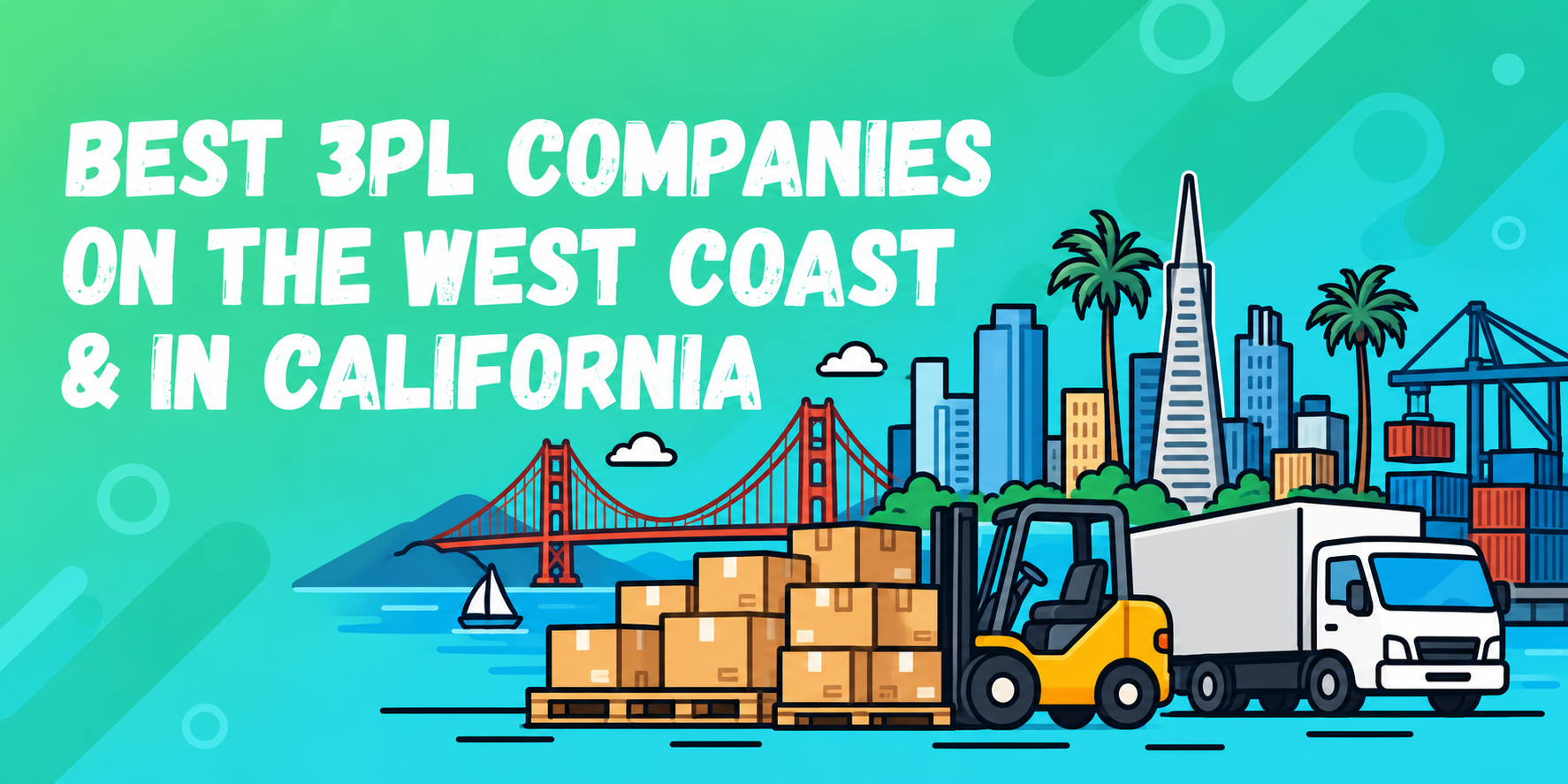
Quick answer: If you want a West Coast partner that has been doing this since 1989, runs Northern and Southern California fulfillment sites, and can pair them with East Coast, Canada, Europe and Asia nodes, start with Rush Order. If you need port-adjacent import handling at very large scale, look at Komar. If you need hazmat, big-and-bulky, or Nevada/Utah tax and cost advantages, there are better fits below, and we say so.
What actually changed this year: The Ports of Los Angeles and Long Beach are projected to handle more than 20 million TEUs in 2026, Los Angeles industrial vacancy has risen into the low-7% range (the highest in the report's lookback), and tariff-driven import timing keeps swinging inventory in and out of Southern California. Brands that treated the West Coast as one cheap warehouse now need to decide which West Coast: port-side Los Angeles, the Inland Empire, the Bay Area, or the Reno/Las Vegas/Salt Lake corridor.
The 7 best 3PLs on the West Coast
1. Rush Order
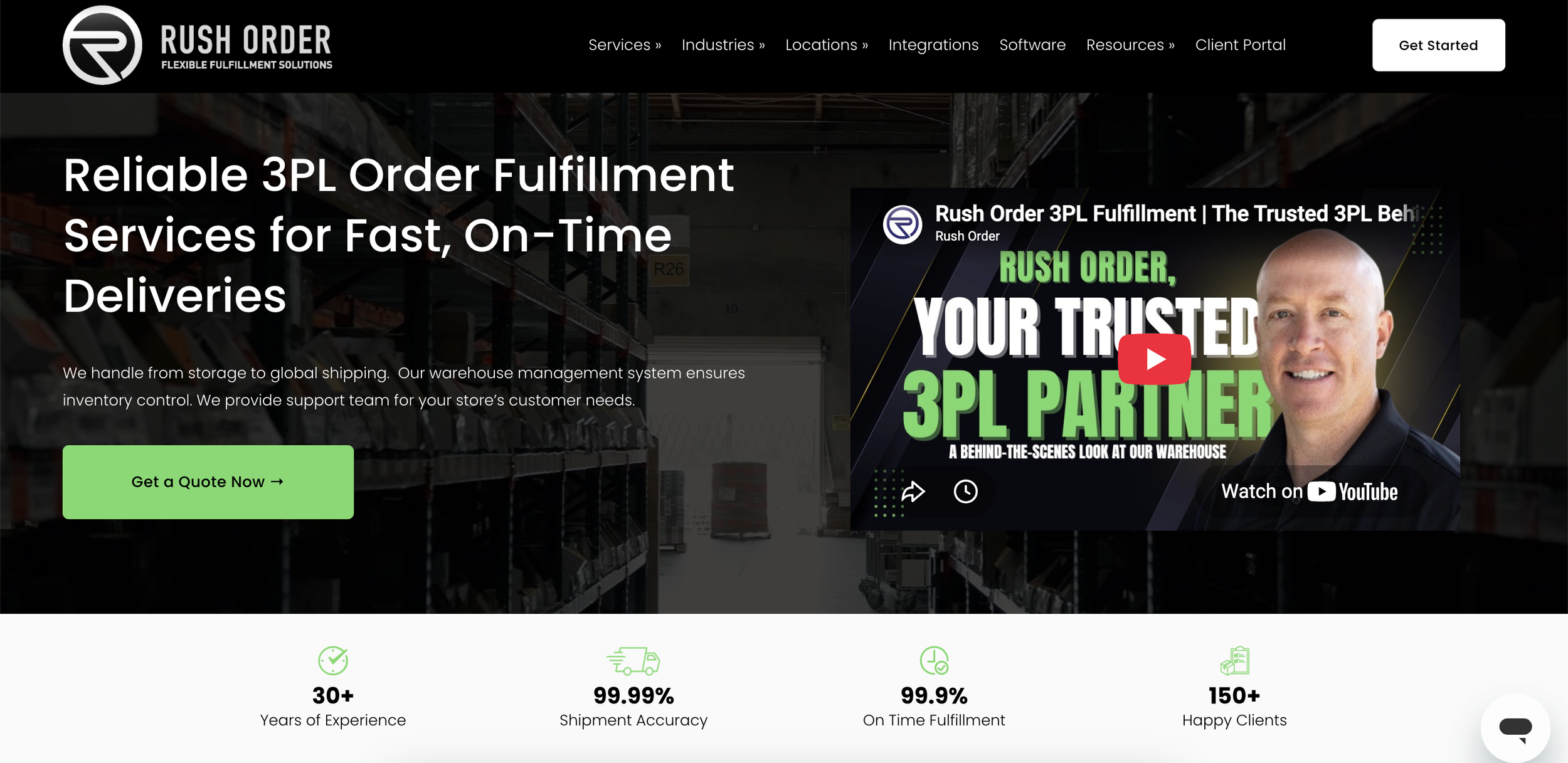
| Headquarters | Gilroy, CA (Northern California) |
| West Coast footprint | Northern California and Southern California sites; see the California fulfillment center page |
| Models | eCommerce, D2C, B2B, omnichannel, retail dropshipping |
| Performance | 99.99% inventory accuracy, 99.9% on-time shipping |
Why it ranks first. Rush Order has fulfilled from California since 1989, and its two California sites mean one provider covers both the Bay Area and Southern California rather than forcing a choice. Most California orders ground-ship in one to two days, and from two nodes (West plus East) a brand can reach most of the country in two to three ground days.
What you get on the West Coast:
Both ends of the state. Northern and Southern California fulfillment centers under one account team and one integration stack (Shopify, Amazon, Walmart/Target EDI).
Import-friendly workflows. Asia fulfillment and Section 321 / DDP programs for brands importing through California ports.
Amazon and retail routing. FBA prep, SFP, Amazon fulfillment services and B2B/retail compliance.
Value-add work. Kitting, value-added services and reverse logistics. Ask us about Prop 65 labeling on your SKUs.
Scale in both directions. Startup fulfillment through large enterprise.
Best for: California-heavy and West-skewed brands, Asia-sourced inventory, brands that want a single partner for the Bay Area and SoCal, and those planning a second coast later.
Consider something else if: you need a Foreign Trade Zone right at the port, hazmat/dangerous goods at volume, or the lowest possible rent in Nevada or Utah.
See case studies or request a quote.
2. Komar Distribution Services
Perris and Eastvale, CA (Inland Empire), with port-adjacent and Foreign Trade Zone options reported. Strong in apparel, cosmetics, heavy automation, and DTC plus B2B.
Best for: high-volume importers wanting port proximity.
Consider something else if: your volume is small or you want a boutique account team. (Verify current FTZ status and minimums directly.)
3. ShipBob (Burbank, CA)
Part of a 50+ center network with strong analytics and multi-node inventory distribution.
Best for: brands shipping 400+ orders a month that want a software-first, self-serve experience.
Consider something else if: you need heavy customization, setup-fee flexibility, or a named account team.
4. Weber Logistics
Founded in 1924, with California operations serving the LA corridor; AIB and FDA certifications and strength in food, beverage, CPG and regulated categories.
Best for: food and CPG needing certified handling.
Consider something else if: you want fast, lightweight DTC onboarding. See our guides to food & beverage and CPG.
5. ShipCalm (Carlsbad, CA)
Reported specialties: dangerous goods/HAZMAT, medical products, reverse logistics, and an in-house call center.
Best for: hazmat and regulated product lines.
Consider something else if: you have a standard non-regulated catalog.
6. Red Stag Fulfillment (Salt Lake City, UT)
Big and bulky specialist (packages over 20 lbs, furniture, oversized goods).
Best for: heavy items shipped from the Mountain West.
Consider something else if: you sell small parcels or need a California address for fastest 1-day ground to the coast.
7. Go Direct Global (Reno, NV)
CPG, nutraceuticals, food and beverage, and electronics, with temperature-controlled and regulated capability from Reno.
Best for: brands that want a Nevada cost base and reach into California and the Northwest.
Consider something else if: most of your customers are in the Southwest or you need a Southern California site.
Also worth a look: Shipfusion (Las Vegas) for low-SKU, high-volume brands; Verde Fulfillment (Los Angeles) for bicoastal DTC and B2B; Fidelitone (Reno) for 3,000+ orders per month.
Side-by-side comparison
| Provider | West Coast base | Best for | Watch-out |
|---|---|---|---|
| Rush Order | Northern + Southern CA | Full-state coverage, Asia imports, retail + DTC | Not a port-side FTZ |
| Komar | Inland Empire | Importers, apparel, cosmetics | Scale-oriented |
| ShipBob | Burbank | Analytics, multi-node | Order minimums, fees |
| Weber Logistics | LA corridor | Food, CPG, certified | Less DTC-lite |
| ShipCalm | Carlsbad | Hazmat, medical | Niche focus |
| Red Stag | Salt Lake City | Big and bulky | Not coastal |
| Go Direct Global | Reno | CPG, supplements, cost base | Not SoCal |
Five decision factors for a West Coast 3PL
Which West Coast? Port-side Los Angeles is closest to imports; the Inland Empire trades distance for lower rent; the Bay Area serves Northern California, the Northwest and Pacific shipments; Reno/Las Vegas/Salt Lake cut costs but add a day to the coast.
Cost reality. California is among the highest-cost states for labor and real estate. Approximate annual rents cited by one industry source: about $19/sq ft in the LA Basin, about $13 in the Inland Empire, and $9-$10 in the Sacramento/Central Valley. Ask how a provider structures workforce under AB5 and how storage is billed. See our 3PL pricing overview.
Compliance. Prop 65 labeling for products sold in California, CARB-driven drayage surcharges, and retailer routing guides. Confirm who owns each step.
Inventory accuracy and technology. Cycle-count discipline (why it matters), 3PL software and analytics.
Second-node strategy. One West Coast site reaches California, Nevada, Utah, Oregon and Washington in one to two ground days, and pairing it with an East or central site covers the country in two to three. Read New York and East Coast guides for that side.
Which category fits your brand?
Importers from Asia: prioritize port access, Asia-side prep, and Section 321/DDP.
Apparel and beauty: see apparel.
Subscription: see subscription box and subscription fulfillment.
Pet or food: see pet and food & beverage.
Alcohol and wine: California wine country needs licensed handlers; see alcohol/wine.
Selling on TikTok: see TikTok Shop fulfillment and TikTok fulfillment.
Enterprise: see enterprise 3PLs.
Switching to a West Coast 3PL: an 8-week playbook
Weeks 1-2: audit SKUs, velocity and carrier mix; pick the node footprint; confirm Prop 65 needs.
Weeks 3-4: integrate storefronts and ERP; set up kitting and labeling.
Weeks 5-6: inbound transfer or direct-from-port receiving; cycle-count the first receipts.
Weeks 7-8: soft launch a percentage of orders, then cut over; review analytics and carrier performance.
FAQ
What is the best 3PL in California? It depends on scale and category. Rush Order is a strong all-around fit for California DTC and retail brands; Komar suits large port-side importers.
Is the Inland Empire or the Bay Area better? Inland Empire for imports and lower rent; the Bay Area for Northern California, the Northwest and faster local delivery. Rush Order covers both via its California sites.
How much does California 3PL fulfillment cost? Higher than the Mountain West on storage and labor; ask for all-in per-order pricing. See outsourced fulfillment.
Do I need Prop 65 labeling? If your products contain listed chemicals and are sold to California consumers, yes. Many 3PLs offer labeling support.
Can one West Coast warehouse serve the whole country? It reaches the Western states in one to two ground days, but to the East Coast ground transit is typically four to five days, so most growing brands add a second node.
What about Canada, Europe and Asia? Rush Order operates Canada, Europe and Asia nodes under global fulfillment.
Can a 3PL handle returns? Yes; see reverse logistics.
Is it better to use FBA? Many brands combine it with a 3PL; see Amazon fulfillment services.
How do I compare 3PL lists? See 3PL companies and what a 3PL does.
The bottom line
California and the West Coast reward brands that pick the right node, not just the cheapest one. Rush Order is built for brands that want a long-tenured partner across Northern and Southern California, with Asia, East Coast and international options when they grow. If your needs point to port-side FTZ volume, hazmat or big-and-bulky, we would rather point you to the right fit than sell you the wrong one. Talk to us.
Sources
ShipCalm: Best 3PL Warehouses in California (vendor-published; rent figures and rankings are the vendor's)
Marcus & Millichap: Los Angeles 2Q26 Industrial Market Report